
Friday, February 14, 2014
Happy Birthday Marion Griffin
Marion Griffin (February 14, 1871 – August 10, 1961), born in Illinois she graduated from MIT in 1894. the first employee hired by Frank Lloyd Wright she was one of the first licensed female architects and considered an original member of the Prairie School.


Sunday, January 5, 2014
Wednesday, January 1, 2014
Wednesday, August 7, 2013
Happy Birthday The Blood Countess: Erzsebet Báthory (1560-1614)

Countess Báthory
is said to have bathed in the blood of 650 young girls, all of whom she tortured, murdered
and drained their bodies of blood to retain her youth.
Reputed to be a vampire, a lesbian and a witch, her story inspired the Brothers
Grimm, Bram Stoker, and Gothic horror fans for the past four hundred years. Legend
has it she was the most prolific serial killer in history.
On August 7th,
1560, the daughter of Baron George Báthory and Baroness Anna Báthory was born.
They named her Erzsebet (anglicized name is Elizabeth Hungary
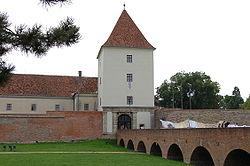
At the age of eleven, she
was engaged to František (Ferenc) Nádasdy who was a nobleman and captain of the
Hungarian army, and moved to Sárvár and Kereszstúr castles to live with her mother-in-law until her marriage.

In 1575, she
married Ferenc. As a wedding gift, he bought her Čachtice Castle in western Slovakia. Often times her husband -- chief commander of the Hungarian troops in the war against the Turks -- was gone for long
periods of time. It was said he was feared and that he danced with the dead bodies of Turk
soldiers, throwing their decapitated heads up in the air after battle. He taught
Erzsebet new ways to reprimand servant girls -- pour honey over their bodies
and leave them outside for the insects to creep all over and wasps to sting them. He also left her with iron torturing devises he used in battle to exercise on
her servants.
While her husband
was gone, Erzsebet managed the affairs of the Castle. It was here that Erzsebet
In 1604, her husband died. Records show more and more young peasant girls went to work in the castle were disappearing. She was extraordinarily powerful. She became more sadistic. She had no supervision. She was isolated. Her mental state was rapidly deteriorating. Erzsebet was now 43 and her angelic complexion had faded. This, it was said, put her into a
tempestuous rage. One night, a maidservant combing her hair, pulled out some strands.
Enraged, Erzsebet hit her in the face, blood splattered all over her arm. Wiping it away, she noticed how soft and smooth her skin was. She consulted with alchemists and they too agreed
blood was an elixir of youth. If nature was going to steal her youth, she would
take it back from the young.
Legend says that Erzsebet began capturing and torturing young girls -- particularly virgins between the ages of
10-14. She lured girls to work for her and ordered her servants to nab girls off the streets from surrounding villages and lock them in the dungeon. There, she attacked them with knives, burned their private parts with a hot iron, and stuck pins underneath their
fingernails before cutting off the digits of those who resisted. She cut areas of flesh from their bodies and forced them to eat it. Shoved in small cages and slowly impaled with spikes. Some, it was said, were hung upside-down by
chains round their ankles, naked and still alive. Their throats slit and blood
drained for Erzsebet
Erzsebet eventually became careless moving
to the nobility for her victims. Four drained bodies were thrown from the walls
of the castle. Peasant girls were one thing, but noble girls were vastly different. Church records show an inordinate amount of deaths of young girls. Word reached Matthias II. And in 1610, an investigation was launched. Troops were sent, dead and mutilated tortured bodies were found strewn about the castle. An official inquiry of 300 witness statements were taken. Her aristocratic status meant she could not be arrested and executed. Her maidservants and accomplices were not so lucky. They had all their fingers pulled out by red-hot pincers, they were tortured and their bodies thrown alive into a fire.

She was
never convicted of any crime. But to remove her from power, she was walled up within her bed chamber with
only small slits for ventilation; and occasionally the passage of food.
After
three years, a guard looking through one of the slots saw the Blood
Countess lying face down on the floor of her chamber, dead. Erzsebet died in Čachtice Castle on August 21, 1614.
This is a result
of the legend created about the life of Countess Báthory. We don't know for
sure. Documents about her life disappeared. Was she a sadistic murderer? Or was this a plot to remove a women from power. Women in early 17th-century Hungary

Considering the Countess was an unfavorable Protestant born into one of the most important and wealthiest noble families in central Europe, a woman managing ten very valuable castles estates on
her own, and that the king owed her late husband a large sum of money, there was motivation to quickly remove her.
Like other
legends, the tales of the Blood Countess were shrouded with rumors. Many books
and films were made of her life. Whether these stories are true or not, their
appeal to a certain kind of audience remains as strong as ever.

Monday, August 5, 2013
Happy Birthday Irene Rice Pereira (1902-1971)
Born on August 5th in Massachusetts, Pereira was influenced by her mother, an amateur artist and enrolled in 1927 at the Art Students League in night art classes. In 1931, she traveled to Europe and North Africa to further her painting studies. In the mid-1930s she studied with Hans Hofmann, and became one of the founders and first instructors at the Design Laboratory.
Known for her work in the Geometric abstraction, Abstract expressionist, Lyrical Abstraction genres and her use of the principles of the Bauhaus school, Pereira's works are displayed at the National Gallery of Art, Smithsonian Institution, Hirshhorn Museum, Brooklyn Museum, Boca Raton Museum of Art, Phillips Collection, and the University of Iowa Museum of Art.
She married her first husband, Umberto Pereira, at twenty-one, her second, George Wellington Brown, an engineer, at forty, followed by her third, the Irish poet George Reavey and divorced him seven years later. She used the professional name I. Rice Pereira to avoid discrimination against female artists. Her work reflects her interest in light, space, and mysticism. She began experimenting with various nontraditional materials in the late 1930s, painting on plastic and glass, and adding such substances as marble dust to her pigments. Some critics called her work ethereal.
Known for her work in the Geometric abstraction, Abstract expressionist, Lyrical Abstraction genres and her use of the principles of the Bauhaus school, Pereira's works are displayed at the National Gallery of Art, Smithsonian Institution, Hirshhorn Museum, Brooklyn Museum, Boca Raton Museum of Art, Phillips Collection, and the University of Iowa Museum of Art.
She married her first husband, Umberto Pereira, at twenty-one, her second, George Wellington Brown, an engineer, at forty, followed by her third, the Irish poet George Reavey and divorced him seven years later. She used the professional name I. Rice Pereira to avoid discrimination against female artists. Her work reflects her interest in light, space, and mysticism. She began experimenting with various nontraditional materials in the late 1930s, painting on plastic and glass, and adding such substances as marble dust to her pigments. Some critics called her work ethereal.
Wednesday, June 26, 2013
Happy Birthday The Silver Lady: Belle Kogan (1902-2000)

Born on June 26th in Ilyashevka, Russia, Belle Kogan emigrated to the US with her family in 1906. She studied mechanical drawing, then taught it soon after graduating high school. She saved money to attend Pratt Institute in Brooklyn, but had to drop out in 1920 to work in her father’s jewelry store. He wanted her to get married, but she told him: "Well, I’m going to have a career, goodbye . . . I am never going to get married and I’m never going to have children. I had a family all my life I helped raise. I helped you in business. I want a life of my own." *
And she did. In 1929, Quaker Silver Company in Attleboro, Massachusetts, hired her to design pewter and silver items. They even paid her tuition to take a course at New York University in the summer of that year.
In 1931 Kogan opened her first studio in New York City: Belle Kogan and Associates (BKA). She was one of the first industrial designers -- and one of the first female industrial designers -- in America to experiment with plastics designing Bakelite jewelry, celluloid vanity items and clocks.
Remarkably, by 1935, she had an impressive client list, including Warren Telecon Company, Celluloid Corporation, Bakelite Corpotation, Federal Glass Company, Red Wing Potteries, Bausch & Lomb, Dow Chemical, Haviland China, Zippo... By 1939 she had a staff of three women designers. It wasn't easy. She faced a lot of opposition in a male-dominated field. In a 1939 interview she stated that, “Manufacturers were quite antagonistic when a woman came around proposing new ideas – they didn't think a woman knew enough about the mechanical aspects of the situation. I had to prove I had a practical mind.” **
She wrote numerous articles on silver for trade journals and designed for a number of silver companies -- Tiffany & Company, Towle and Samuel Kirk & Sons.

Silver Plated Meat Dish, 1936, Reed & Barton
Offered by Heritage Auctions, Dallas, Texas, on June 13, 2012

Silver Plated Double Vegetable Dish, 1936, Reed & Barton
Dallas Museum of Art, The Jewel Stern American Silver Collection
In 1972 she left the studio to work as a consultant.
* (see Pat Kirkham’s book, Women Designers in the USA, 1900-2000: Diversity and Difference; and Modernism in American Silver by Jewel Stern)
Wednesday, May 22, 2013
Subscribe to:
Posts (Atom)